
Precious Azuonwu
 ChatGPT vs DeepSeek, ChatGPT comparison
 0 comment
 06 Oct, 2025
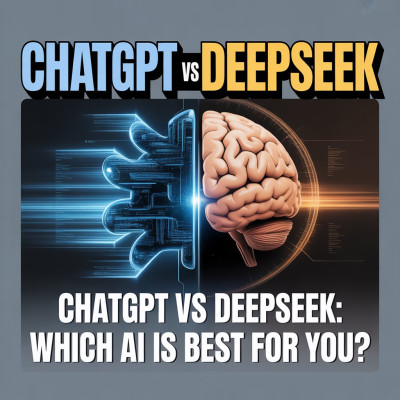
Artificial Intelligence has evolved beyond simple automation to become an essential companion for communication, research, and productivity. As we step deeper into 2025, two of the most discussed AI models are ChatGPT and DeepSeek which are shaping how individuals and businesses interact with technology. Both have impressive capabilities, but each brings unique strengths and limitations that influence which might be more suitable for your needs.
AI tools are no longer limited to text generation. They can now analyze data, perform reasoning, generate code, and even simulate human-like conversation with near-natural precision. The rise of ChatGPT and DeepSeek symbolizes this new era of intelligent systems focused on deeper understanding.
12 Highest paying Cybersecurity jobs, salaries in 2025
10 Affordable IT courses under 15000 in Nigeria
Overview of ChatGPT
Brief History and Evolution
Developed by OpenAI, ChatGPT gained global recognition for its natural conversational ability and broad general knowledge. Evolving from GPT-3 to GPT-5, it now powers chatbots, business assistants, educational tools, and more.
ChatGPT is built on a large language model (LLM) trained using reinforcement learning from human feedback (RLHF). This helps it understand complex questions, generate creative responses, and maintain a conversational tone across multiple contexts.
ChatGPT is used across sectors from customer service and marketing to coding, education, and research. Its versatility allows integration with tools like Microsoft Office, Slack, and various APIs, making it a go-to for daily productivity.
Background and Development
DeepSeek is a relatively new yet powerful AI system designed to challenge established models like ChatGPT. Built with a focus on reasoning and logic-based responses, DeepSeek emphasizes precision, analysis, and factual depth rather than pure conversation flow.
DeepSeek’s architecture integrates multi-step reasoning algorithms and enhanced data modeling techniques. This allows it to perform detailed computations, generate analytical responses, and excel in structured problem-solving tasks.
Professionals use DeepSeek in data analytics, research writing, coding, and academic support. Its performance shines where logical reasoning and evidence-based results are crucial such as technical documentation or research projects.
ChatGPT excels at creativity, flow, and understanding complex prompts in conversation-style exchanges. DeepSeek, however, focuses on structured accuracy, often providing more technical and logically consistent responses.
While ChatGPT provides insightful, well-rounded answers, DeepSeek leans toward step-by-step reasoning, making it better for analytical or mathematical problem-solving.
Both tools can generate and debug code. However, DeepSeek has been noted for its logical debugging capabilities, while ChatGPT stands out for explaining code in simple terms for learners.
ChatGPT is the superior choice for creative writing, storytelling, and conversational engagement. DeepSeek maintains a more formal and analytical tone, prioritizing precision over personality.
ChatGPT offers both free and premium plans with wide API integration. DeepSeek’s access depends on platform partnerships but is gradually expanding through web-based interfaces and developer APIs.
ChatGPT integrates smoothly with apps like Notion, Trello, and Microsoft Copilot. DeepSeek’s integrations are more specialized, catering to research and data analysis tools.
Both AI models implement advanced encryption and privacy policies. OpenAI’s ChatGPT has a well-documented compliance framework, while DeepSeek maintains high privacy standards for enterprise-level users.
ChatGPT is more effective for storytelling, social media posts, and campaign ideas. Its tone flexibility helps brands maintain consistency and engagement.
DeepSeek may outperform ChatGPT in debugging logic-heavy code and offering detailed algorithmic insights. However, ChatGPT remains an excellent teaching companion for new developers.
Businesses seeking customer engagement benefit from ChatGPT’s versatility. In contrast, research-driven organizations might prefer DeepSeek’s precision and structured analysis.
Instead of choosing one over the other, many professionals use both ChatGPT and DeepSeek for complementary tasks, ChatGPT for creativity, DeepSeek for logic.
Future AI systems are likely to merge reasoning, emotional intelligence, and multimodal capabilities, bridging the gap between conversation and computation.
Ultimately, ChatGPT and DeepSeek cater to different user preferences. ChatGPT stands out for creativity and interaction, while DeepSeek leads in analytical reasoning. Your best choice depends on what you aim to achieve.
ChatGPT focuses on conversational fluency and creativity, while DeepSeek emphasizes logic, reasoning, and structured problem-solving.
DeepSeek often delivers more logical debugging and structured code solutions, while ChatGPT is better at explaining code concepts.
Yes, DeepSeek’s data-driven design often provides more detailed research-oriented responses.
Yes, both integrate with third-party tools, though ChatGPT has broader general-purpose compatibility.
Both maintain strong data privacy policies, but users should still avoid sharing confidential information.
ChatGPT is generally preferred for creative and conversational content, while DeepSeek is ideal for structured analysis.
ChatGPT offers a free plan and premium tiers, while DeepSeek’s access may vary by region and platform.
Businesses should evaluate pricing, integration needs, data security, and task complexity before making a choice.


Precious Azuonwu
0 comment